

MOROCCO, RENAULT SIGN NEW INVESTMENT DEAL TO CREATE 7,500 JOBS BY 2030
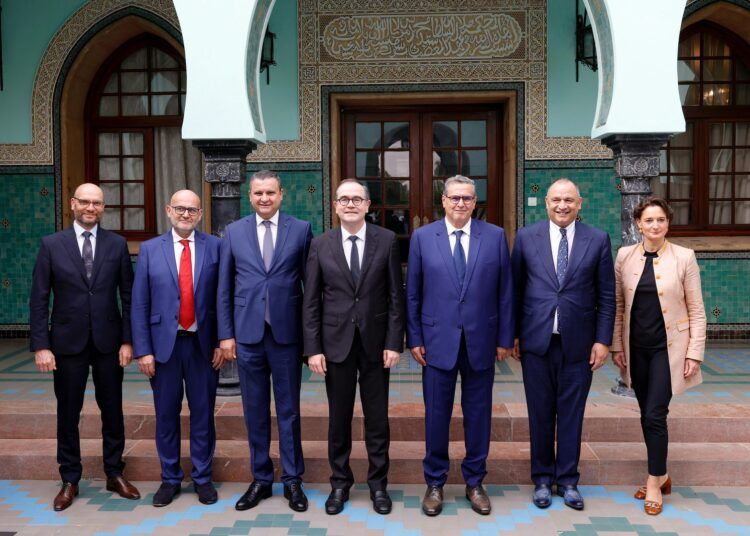
Rabat – Morocco’s Prime Minister Aziz Akhannouch held a meeting today in Rabat with François Provost, Executive Vice President of Groupe Renault, in the presence of Minister of Industry and Trade Ryad Mezzour.
The meeting was followed by a signing ceremony for an addendum to the existing investment agreement between Morocco and Renault, marking a new phase in the automotive giant’s expansion in the country.
According to a government statement, the addendum will have a significant economic impact, generating 7,500 direct and indirect jobs while boosting Morocco’s status as one of the leading automotive manufacturing hubs in Africa.
During the meeting, Akhannouch underlined that Morocco continues to consolidate its achievements in the automotive sector through partnerships with world-leading industrial groups.
He noted that the national goal is now to open the sector to advanced technologies to boost competitiveness and further develop Moroccan expertise.
The newly signed agreement sets the stage for a structured development plan extending from 2025 to 2030.
It strives to modernize Renault’s industrial ecosystem in Morocco by introducing new electric vehicle models, upgrading manufacturing facilities and production lines, and strengthening workforce training.
By 2030, Renault plans to launch an entirely new line of electric vehicles made in Morocco, alongside the renewal of its flagship models.
The group will also establish an engineering center dedicated to research and development before the end of 2025, a move that further anchors the country’s ambitions to become a regional leader in hybrid and electric mobility.
Renault’s commitment reflects continued confidence in Morocco’s industrial platform, which offers competitive infrastructure, skilled labor, and an expanding logistics network.
In 2024 alone, Renault Morocco produced over 413,000 vehicles, with 90% of them exported to more than 68 countries under the “Made in Morocco” label.
The new phase of collaboration reaffirms Morocco’s growing role in the global shift toward sustainable mobility and green industrialization, positioning the North African country as a key partner in the transition to next-generation automotive technologies.